Night Shift Meal Prep: A Complete Guide for UK Shift Workers
Quick Summary
- Eat three times per shift — main meal before, lighter meal during, small meal after
- All meals under £2 per portion — prep a full week's worth on Sunday
- Essential kit costs under £15 — containers, a slow cooker, and a flask
- The 3am rule — if you're craving junk, you're tired not hungry
Short Answer: Night shift meal prep means cooking a week's worth of meals in 1-2 hours on your day off. Eat your main meal before your shift (6-7pm), a lighter meal mid-shift (midnight), and something small before bed (7am). Budget: roughly £10-15 per week for all your shift food.
This article contains affiliate links. If you buy through these links, we may earn a commission at no extra cost to you.
Why Night Shift Meal Prep Matters
Working nights messes with everything — your sleep, your energy, and especially your eating habits. The vending machine at 2am becomes your best mate, and by the end of the week you've spent more on meal deals than you'd care to admit.
Meal prepping isn't about being a fitness influencer. It's about having decent food ready when you need it, without thinking about it at stupid o'clock.
There's a metabolic side to this too. Research shows that shift work disrupts your body's circadian rhythm, which directly affects how you process food. Your insulin sensitivity drops at night, meaning the same sarnie that's fine at noon hits differently at 2am — your body stores more of it as fat and gives you less usable energy. Over time, that adds up. Night shift workers have higher rates of weight gain, type 2 diabetes, and digestive problems, and a big part of that comes down to what and when you eat.
Then there's the money. Let's be honest about the vending machine trap. A chocolate bar here, a bag of crisps there, maybe a meal deal from the petrol station on the way in. You're looking at £3-4 a night without even thinking about it. Over a month of shifts, that's £60-80 gone on food that leaves you feeling worse than before you ate it. Prep your own meals and you're spending £10-15 a week for better food that actually keeps you going. The maths isn't even close.
The real benefit, though, is removing decisions. At 3am, your willpower is at rock bottom. Your brain is screaming for sugar and quick energy. If you've got a container of proper food in the fridge, you eat that. If you haven't, you're standing in front of the vending machine again. Meal prep takes the thinking out of it — and at 3am, that's exactly what you need.
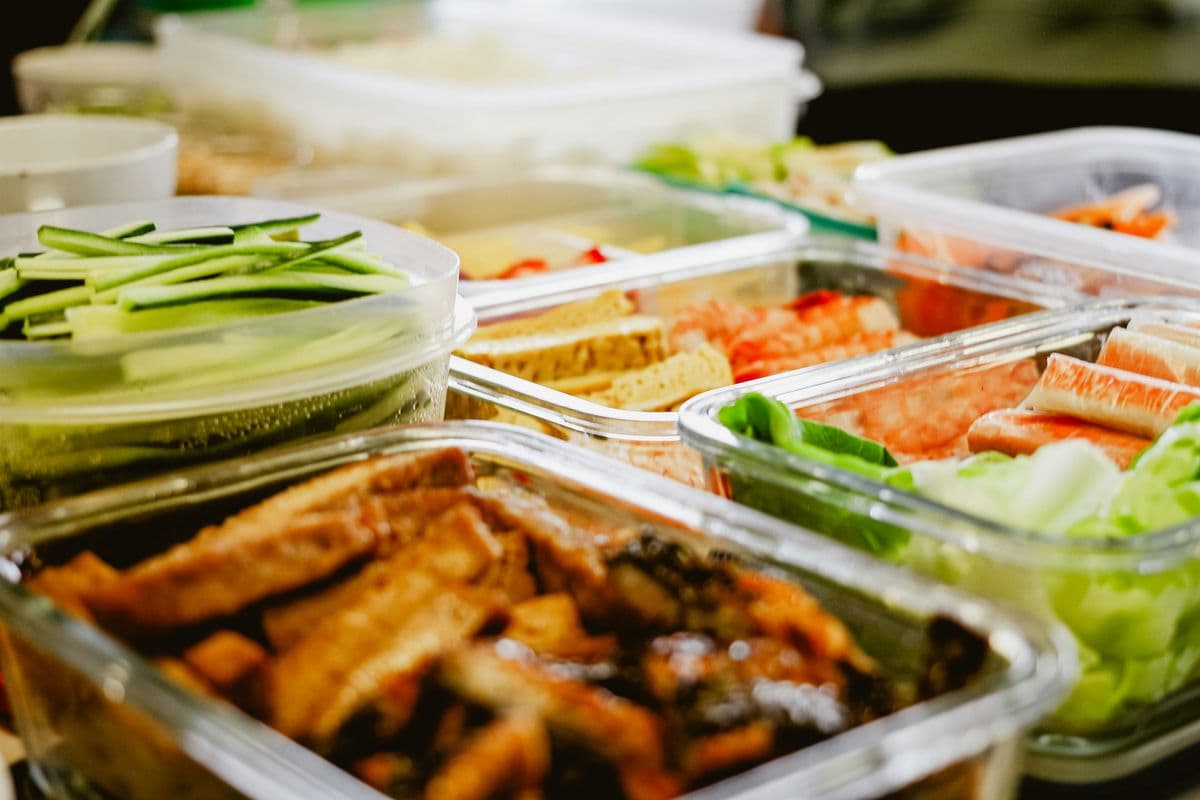
When to Eat on Night Shifts
The biggest mistake shift workers make is trying to eat like a day worker. Your body clock is flipped, so your meals should be too.
- Before your shift (6-7pm): Your main meal. Think of this as your "lunch" — something substantial with protein, carbs, and veg.
- During your shift (12-1am): A lighter meal. Heavy food at this hour will make you drowsy.
- End of shift (6-7am): A small meal before bed. Nothing too heavy or you'll struggle to sleep.
Your Sunday Prep Session
You don't need to spend your entire day off in the kitchen. Two hours on a Sunday afternoon gets you sorted for the whole week. Here's how to break it down:
First 30 minutes — Get the base going. Put a large pot of rice on and get pasta boiling in another pan. These are the foundations of most of your meals, so cook plenty. While they're going, dice your onions and peppers for the week.
Next 30 minutes — Protein and slow stuff. Brown your mince for bolognese and get the sauce simmering. If you've got a slow cooker, load up a bean chilli now — it'll be done by the time you finish everything else. Cook your chicken breasts in the oven (season with whatever you fancy, just get them in).
Next 30 minutes — Assembly line. Slice your cooked chicken and start building your rice bowls. Assemble your wraps — lay out tortillas, add tuna and sweetcorn, roll and wrap in foil. Make your overnight oats in jars or containers (oats, milk, yoghurt, done).
Final 30 minutes — Portion, label, stack. Divide everything into individual containers. Write the day on each lid with a bit of tape or a dry-wipe marker. Stack the first three days in the fridge and the rest in the freezer. Move a frozen container to the fridge each morning so it's defrosted by the time you need it.
That's five shifts of food sorted. Put the kettle on, you've earned it.
Budget Meal Prep Ideas
All of these cost under £2 per portion and can be prepped on a Sunday afternoon:
- Chicken and rice bowls with frozen veg (£1.50/portion) — Great as your pre-shift main meal. Season the chicken with paprika or fajita spice to stop it getting boring. Add a bag of frozen mixed veg for barely any extra cost. Pack this as your 6-7pm meal.
- Pasta with homemade bolognese, batch frozen (£1.20/portion) — A solid pre-shift option or a mid-shift main if you prefer eating later. Make a massive batch and freeze in portions. Reheats perfectly in the microwave in about 3 minutes.
- Wraps with tinned tuna, sweetcorn, and light mayo (£0.90/portion) — Ideal mid-shift food. Light enough that you won't feel sluggish but filling enough to keep you going. Wrap them in foil and they'll keep fine in your bag or the work fridge.
- Overnight oats for your end-of-shift meal (£0.60/portion) — Perfect for eating before bed. Oats, milk, a spoon of yoghurt, maybe some frozen berries. Cold, easy, and won't sit heavy while you try to sleep.
- Bean chilli with rice — freezes brilliantly (£1.10/portion) — Works as a pre-shift or mid-shift meal depending on your preference. Packed with protein from the beans, and you can adjust the spice level. Defrost the night before and reheat at work.
Essential Kit
You don't need much:
- A decent set of meal prep containers (buy on Amazon) — about £10
- A slow cooker (buy on Amazon) — set it before your shift, food's ready when you wake up
- A food flask (buy on Amazon) for soup or porridge on shift
Storage and Reheating
Getting the storage right is the difference between good meal prep and food that ends up in the bin.
Fridge meals last 3-4 days. Anything you'll eat Monday to Wednesday can go straight in the fridge. For Thursday onwards, freeze it and move it to the fridge the morning before your shift to defrost.
Frozen meals keep well for 2-3 months. Make sure containers are properly sealed and leave a small gap at the top — food expands slightly when frozen. Label everything or you'll end up playing freezer roulette.
Reheating at work: Most breakrooms have a microwave. Reheat until piping hot throughout — usually 2-3 minutes, give it a stir halfway. If your workplace doesn't have a microwave, a food flask is your best option. Heat your food at home before leaving, pour it into the flask, and it'll stay hot for 5-6 hours. Problem solved.
Common Mistakes
Before we get into the 3am trap, here are the most common meal prep mistakes that trip night shift workers up:
- Eating too much before your shift. A massive plate of food at 6pm will have you fighting to stay awake by 10pm. Eat a solid main meal, but don't stuff yourself.
- Relying on caffeine instead of food. Coffee keeps you alert for a bit, but it's not fuel. If you're skipping meals and necking energy drinks instead, you'll crash harder later.
- Not eating enough protein mid-shift. Carbs alone will spike your blood sugar and drop you off a cliff. Make sure your midnight meal has decent protein — chicken, tuna, beans, eggs.
- Skipping the end-of-shift meal. It's tempting to just go straight to bed, but eating something light helps your body wind down properly and stops you waking up starving at noon.
- Not prepping enough variety. Eating the same chicken and rice five nights running gets old fast. Boredom kills consistency. Rotate between three or four different meals each week to keep things interesting.
The 3am Rule
If you're craving rubbish at 3am, it's usually because you're tired, not hungry. Have a protein-rich snack prepped and ready — Greek yoghurt, nuts, or a protein bar. It'll see you through without the energy crash.
Good 3am snacks to have packed and ready:
- Oatcakes with a couple of slices of cheese
- A couple of boiled eggs (prep a batch on Sunday)
- A banana with a tablespoon of peanut butter
- A protein shake (pre-mixed in a shaker, kept in the fridge)
- A small pot of Greek yoghurt with a handful of nuts
Meal prepping for nights isn't glamorous, but it saves money, keeps your energy steady, and stops you feeling like death by Friday. That's a win.
Sources & Further Reading
Related Articles
- What to Eat on Night Shift to Stay Awake
- Batch Cooking Sunday: 5 Dinners in 2 Hours
- Cheap Slow Cooker Meals Under £1.50 Per Portion
- Best Sleep Schedule for Night Shifts
Frequently Asked Questions
How much does night shift meal prep cost per week?
About £10-15 for all your shift meals and snacks. That's roughly £2-3 per shift compared to £3-4 per night on vending machines and meal deals. You'll save £40-60 per month.
What's the best container for shift work meal prep?
Any stackable, microwave-safe containers with secure lids. You can get a 10-pack from Amazon or Wilko for about £10. Glass containers last longer but are heavier to carry.
Can I freeze meal prep for night shifts?
Yes — batch-cook meals like chilli, bolognese, and curry, then freeze in individual portions. Defrost overnight in the fridge before your shift. Most prepped meals freeze well for 2-3 months.
What should I eat at 3am on a night shift?
A protein-rich snack rather than sugar or caffeine. Greek yoghurt with nuts, a banana with peanut butter, or oatcakes with cheese. These give sustained energy without the crash.
This article is for informational purposes only and is not a substitute for professional medical advice. Always consult your GP before making changes to your diet, exercise routine, or health management.
Gary is a UK night shift worker and the founder of OffShift. Content on this site is for informational purposes only and is not a substitute for advice from your GP or a qualified health professional. About the author →
The Shift Worker's Health Reset
Practical advice on sleep, meals, and energy — built around your rota. Free, every week.
No spam, unsubscribe anytime.