Quick Summary
- **A complete HIIT session in exactly 10 minutes, no equipment required
- 10 exercises, 30 seconds work, 15 seconds rest per exercise
- Includes a low-impact version for flats, bad knees, or beginners
- Done before your shower, before life gets in the way
Short Answer: This 10-minute morning HIIT workout uses 10 bodyweight exercises at 30 seconds each with 15-second rests. It improves cardiovascular health, burns fat, and boosts energy for the day. There is a low-impact version for anyone who needs less jumping. Do it before your shower and it becomes a daily habit within two weeks.
10 Minutes Is Enough
You don't need an hour. You don't even need 30 minutes. Research consistently shows that short, high-intensity workouts improve cardiovascular health, burn fat, and boost energy levels throughout the day.
This workout takes exactly 10 minutes. You can do it in your bedroom before your shower. No equipment, no neighbours complaining about jumping.
Warm Up First
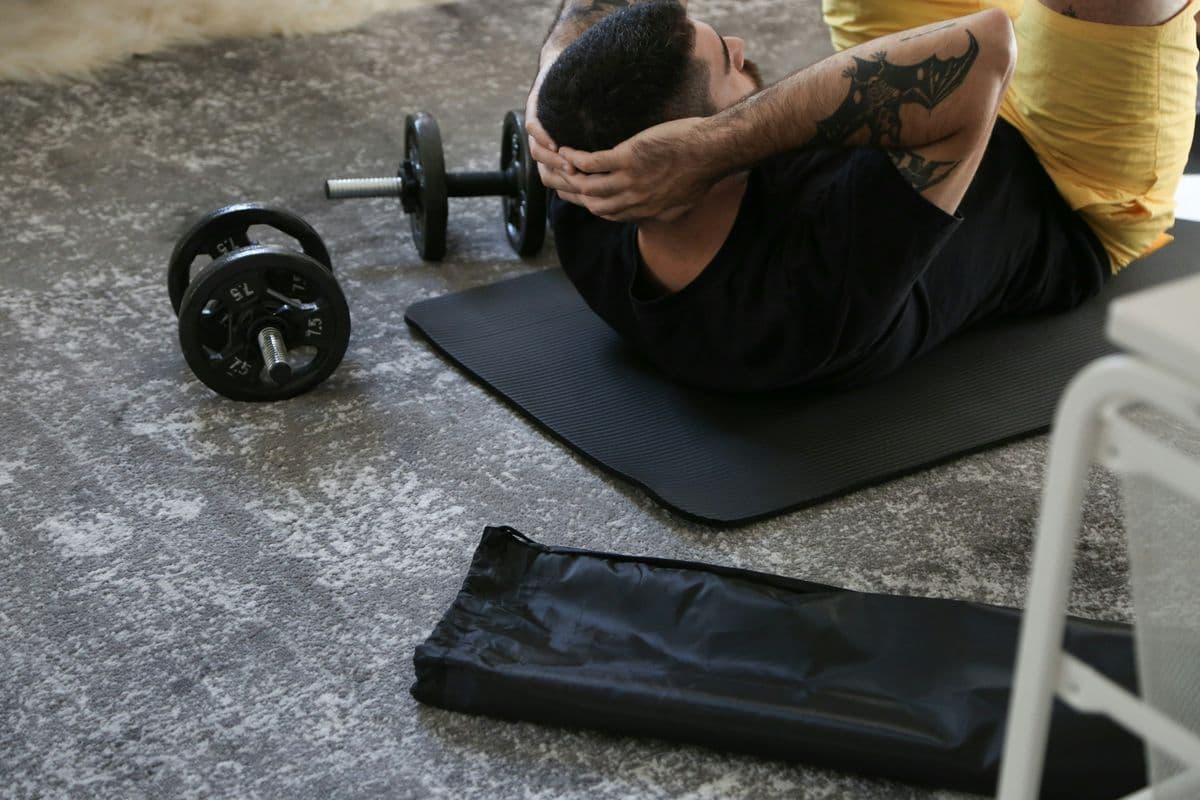
Before you start, spend 60 seconds loosening up. March on the spot for 15 seconds, do 10 arm circles each direction, 10 hip circles each direction, then 5 slow bodyweight squats. That is it — one minute.
Cold muscles and explosive movements are a recipe for pulled hamstrings and tweaked backs. You do not need a 10-minute warm-up for a 10-minute workout, but you do need something. Sixty seconds is the bare minimum that actually makes a difference. Your joints will thank you, especially first thing in the morning when everything is stiff.
The Workout
Format: 30 seconds work, 15 seconds rest. 10 exercises. One round.
- High knees — drive your knees up fast, pump your arms. Keep your core tight and land on the balls of your feet, not your heels.
- Squat to press — squat down, stand up and press arms overhead. Push your hips back like you are sitting into a chair, and keep your weight in your heels.
- Push-ups — full or on knees, just keep moving. Hands just wider than shoulder-width, lower until your chest nearly touches the floor.
- Jumping jacks — classic, simple, effective. Land softly with a slight bend in your knees to protect your joints.
- Reverse lunges — alternating legs, controlled pace. Step far enough back that both knees hit roughly 90 degrees at the bottom.
- Plank shoulder taps — in plank position, tap opposite shoulder. Keep your hips square to the ground — do not rock side to side.
- Squat jumps — squat down, explode up (or just fast squats if you're in a flat). Land softly with bent knees and go straight into the next rep.
- Bicycle crunches — on your back, elbow to opposite knee. Slow these down — the twist is what works your obliques, not the speed.
- Burpees — the one everyone hates but everyone needs. Step or jump your feet back, keep your back flat at the bottom, and drive through your legs to stand.
- Mountain climbers — in push-up position, drive knees to chest fast. Keep your hips level with your shoulders and do not let your lower back sag.
The Low-Impact Version
If you live in a flat, have dodgy knees, or just aren't ready for jumping yet:
- Replace jumping jacks with fast step-outs
- Replace squat jumps with pulse squats
- Replace burpees with squat thrusts (no jump)
- Replace mountain climbers with slow controlled knee drives
Same workout, same benefits, less noise.
Cool Down
Once you finish the last mountain climber, do not just collapse on the sofa. Take two minutes to stretch out:
- Child's pose — 30 seconds. Kneel down, sit back on your heels, stretch your arms forward on the floor. Breathe.
- Standing quad stretch — 30 seconds each leg. Stand on one leg, pull the other foot up behind you towards your backside. Hold a wall if you need balance.
- Standing hamstring stretch — 30 seconds. Foot on a step or chair, keep your leg straight, lean forward gently from the hips.
This prevents stiffness later in the day, especially if you are about to sit at a desk for eight hours. Two minutes now saves you shuffling around the office like you have aged 40 years by lunchtime.
Why Morning?
Exercising first thing means it's done before life gets in the way. No meetings, no emergencies, no kids needing something. Set your alarm 15 minutes earlier — 10 for the workout, 5 to stop hitting snooze.
There is also the decision fatigue angle. By 6pm you have made hundreds of decisions — what to eat, what to prioritise at work, how to respond to that passive-aggressive email. Your willpower is shot. Telling yourself you will train after work is setting yourself up to fail. Morning training removes the choice entirely. Alarm goes off, you get up, you do the workout. No deliberation, no bargaining with yourself on the sofa.
It also pairs naturally with a routine. Alarm, workout, shower, breakfast. Stack it between things you already do and it stops feeling like an extra task. It just becomes part of waking up.
The hardest part is starting. After day three it becomes habit. After two weeks you'll feel weird if you skip it.
Progression: When 10 Minutes Gets Easy
After a few weeks, this workout will start to feel comfortable. Good — that means it is working. But comfortable is not the goal. Here is how to keep progressing without reinventing the wheel:
Add a second round. Run through all 10 exercises again for a 20-minute session. Rest 60 seconds between rounds. This is the simplest upgrade and it doubles your training volume overnight.
Increase the work intervals. Move from 30 seconds work / 15 seconds rest to 40 seconds work / 15 seconds rest. That extra 10 seconds per exercise adds up. It also forces you to pace yourself better rather than going flat out and dying halfway through.
Add resistance. Hold a pair of water bottles or strap on a weighted vest. Even 2-3kg makes a noticeable difference on squat jumps, lunges, and burpees. You do not need to buy a full set of dumbbells for this — anything with a bit of weight works.
Move to a longer programme. If you have built the habit and want to step things up properly, try the 20-Minute Dumbbell Workout at Home. It is the natural next step when bodyweight alone stops challenging you.
The key is to only change one variable at a time. Do not add a second round, increase intervals, and add weight all at once. Pick one, stick with it for two weeks, then reassess.
Common Mistakes
Going too hard on day one. Start at about 70% effort. If you go full intensity on your first session, you will be so sore the next day that you skip day two. Build up over the first week.
Skipping the warm-up. Sixty seconds. That is all it takes. Your hamstrings and lower back are particularly vulnerable first thing in the morning when everything is cold and stiff. Do the warm-up.
Holding your breath. It happens more than you think, especially during planks, push-ups, and crunches. Breathe out on the effort, breathe in on the reset. If you are holding your breath, you are working too hard — dial it back.
Doing it every single day. Three to five sessions per week is the sweet spot. Your muscles need time to recover, even from bodyweight training. Rest days are not lazy days — they are when your body actually gets stronger.
Comparing yourself to YouTube HIIT videos. Those people do this for a living. They have trained for years, they are performing for a camera, and half of them are using editing to look faster than they are. Go at your pace. The only person you need to be fitter than is last week's version of yourself.
Sources & Further Reading
- NHS — Physical activity guidelines for adults
- British Heart Foundation — HIIT workouts
- NHS — Strength and flexibility exercises
Related Articles
- Bodyweight Workout for Beginners — a structured 12-week plan if you want more than 10 minutes
- 20-Minute Dumbbell Workout at Home — step up to weights when bodyweight gets too easy
- Stay Fit Working 50+ Hours a Week — how to fit training around a demanding schedule
- Walking for Weight Loss — complement your HIIT days with low-impact walking
Frequently Asked Questions
Can a 10-minute workout actually make a difference?
Yes. Research shows that short, high-intensity sessions improve cardiovascular fitness, burn fat, and boost metabolic rate for hours afterwards. Ten minutes of HIIT five days a week is 50 minutes of high-quality training. That is more effective than most people's hour-long gym sessions spent resting between sets.
How many days a week should I do this workout?
Three to five days works well. If you are new to HIIT, start with three days and add a day each week as your fitness improves. On off days, walk or rest. Doing HIIT every single day without rest can lead to burnout, so listen to your body and take at least two days off per week.
What if I can't keep up with the 30-second intervals?
Go at your own pace. If you need to stop halfway through a 30-second block, take a breath and start again. The low-impact version is also a legitimate option — it delivers the same benefits with less intensity. Your fitness will catch up within a few weeks.
Will HIIT make me bulky?
No. HIIT builds cardiovascular fitness and lean muscle endurance. It does not build bulk — that requires heavy resistance training, a calorie surplus, and a lot of time under the barbell. If anything, regular HIIT will make you leaner and more defined. You are not going to accidentally end up looking like a bodybuilder from 10 minutes of burpees.
Can I do this on night shifts?
Yes. The "morning" part is about doing it before your day starts, not about the time on the clock. If you work nights, do the workout before your shift begins — whether that is 4pm, 8pm, or midnight. The benefits are the same: you get it done before work takes over, and you start your shift with more energy. Just avoid doing it right before you plan to sleep, as HIIT can make it harder to wind down.
Should I eat before a morning HIIT workout?
For 10 minutes, it is fine to train on an empty stomach if that feels comfortable. Some people perform better with a small snack like a banana 15-20 minutes beforehand. Experiment and see what works for you. Either way, have a decent breakfast with protein afterwards to support recovery.
This article is for informational purposes only and is not a substitute for professional medical advice. Always consult your GP before making changes to your diet, exercise routine, or health management.
Gary is a UK night shift worker and the founder of OffShift. Content on this site is for informational purposes only and is not a substitute for advice from your GP or a qualified health professional. About the author →
The Shift Worker's Health Reset
Practical advice on sleep, meals, and energy — built around your rota. Free, every week.
No spam, unsubscribe anytime.