Quick Summary
- Switching tariffs is the biggest win — 15 minutes of effort can save £100-300 per year
- Optimise your existing heating controls (thermostat, timer, TRVs) to save another £100-200 annually
- Cheap draught-proofing and LED bulbs deliver real savings without sacrificing comfort
Short Answer: Cut your energy bills by switching to a cheaper tariff, reducing your thermostat by 1-2 degrees, using your heating timer and radiator valves properly, and draught-proofing doors and windows. These changes alone can save £200-500 per year with minimal effort and no loss of comfort.
This article contains affiliate links. If you buy through these links, we may earn a commission at no extra cost to you.
Your Energy Bills Are Too High
The average UK household energy bill is over £1,800 per year. That's £150+ per month going to gas and electric — money that could be paying down debt, building savings, or just making life a bit less tight.
Most energy-saving advice is either blindingly obvious ("turn the lights off") or completely impractical ("install a heat pump for £12,000"). This guide focuses on changes that save meaningful money and don't require you to live like a Victorian.
The Big Wins (Save £200-500/Year)
These take a bit of effort but deliver the biggest savings.
1. Switch to a Better Tariff
This is the single most impactful thing you can do, and it takes 15 minutes.
- Check your current tariff on your latest bill
- Compare deals at Uswitch, MoneySupermarket, or the Ofgem-accredited comparison sites
- Fixed tariffs are often cheaper than variable/standard rates
- Switch online — the new supplier handles everything
Typical saving: £100-300 per year. If you haven't switched in the last 12 months, you're almost certainly overpaying.
2. Understand Your Heating Controls
Most people's heating runs more than it needs to because they don't understand their controls.
Your thermostat sets the maximum temperature. If it's at 22°C, try 20°C for a week. Each degree reduction saves roughly £80-100 per year. Most people adapt within 3-4 days.
Your timer controls when the heating comes on. Set it to come on 30 minutes before you wake up and turn off 30 minutes before you leave (or go to bed). Radiators stay warm after the boiler switches off.
Thermostatic radiator valves (TRVs) control individual radiators. Turn down or off the radiators in rooms you rarely use (spare bedrooms, utility rooms). There's no point heating a room nobody's in.
Typical saving: £100-200 per year from optimising controls you already have.
3. Insulate (Even Cheaply)
Heat escapes through walls, roofs, windows, and gaps. You don't need to spend thousands:
Draught-proofing (£20-50):
- Self-adhesive foam strips (buy on Amazon) around doors and windows. B&Q, Screwfix, or Wilko
- A draught excluder (or a rolled-up towel) at the bottom of exterior doors
- A chimney balloon (buy on Amazon) if you have an unused fireplace (£15-20)
- Seal gaps around pipes entering the house with expanding foam
Loft insulation (free or cheap):
- Check if you have at least 270mm of loft insulation
- Many energy suppliers still offer free or subsidised loft insulation — check with your supplier or local council
- If you're a homeowner, the ECO scheme may cover it for free
Curtains:
- Thick curtains over windows reduce heat loss significantly, especially for single-glazed windows
- Close them as soon as it gets dark
- Thermal curtain linings (buy on Amazon) cost about £10-15 per window
Typical saving: £50-150 per year for draught-proofing and curtains. More if you add loft insulation.
The Medium Wins (Save £50-200/Year)
4. Hot Water Efficiency
Heating water accounts for a big chunk of your gas bill.
- Reduce your boiler flow temperature. If you have a combi boiler, reduce the flow temperature to 55-60°C. Your radiators will still heat the house but more efficiently. This alone can save 8-10% on gas bills
- Shorter showers. Cutting your shower from 8 minutes to 4 minutes saves about £70/year for a family of four. Set a timer or use a shower playlist (2 songs = done)
- Don't overfill the kettle. Boil only what you need. If you boil a full kettle 4 times a day instead of a cup's worth, that's about £30-40/year wasted
- Wash clothes at 30°C. Modern detergents work fine at 30°C. You save about £30/year and your clothes last longer
5. Lighting and Appliances
- Switch to LED bulbs (buy on Amazon). If you haven't already, this is a no-brainer. LED bulbs use 75% less energy than old bulbs and last 10+ years. Replace the bulbs you use most first
- Turn off standby. TVs, games consoles, set-top boxes, and phone chargers all draw power on standby. A standby saver plug (buy on Amazon) (£10) lets you switch everything off at once. Saves £30-60/year
- Use the microwave. Microwaving food uses significantly less energy than an oven. Reheating a meal in the microwave costs about 1p. In the oven, 15-20p
- Full loads only. Run the washing machine and dishwasher with full loads. Two half-loads use more energy than one full load
- Air dry when possible. A tumble dryer costs about 50p-£1 per cycle. That's £100-200/year if you use it daily. Use an airer (indoor or outdoor) when you can
6. Smart Meter and Monitoring
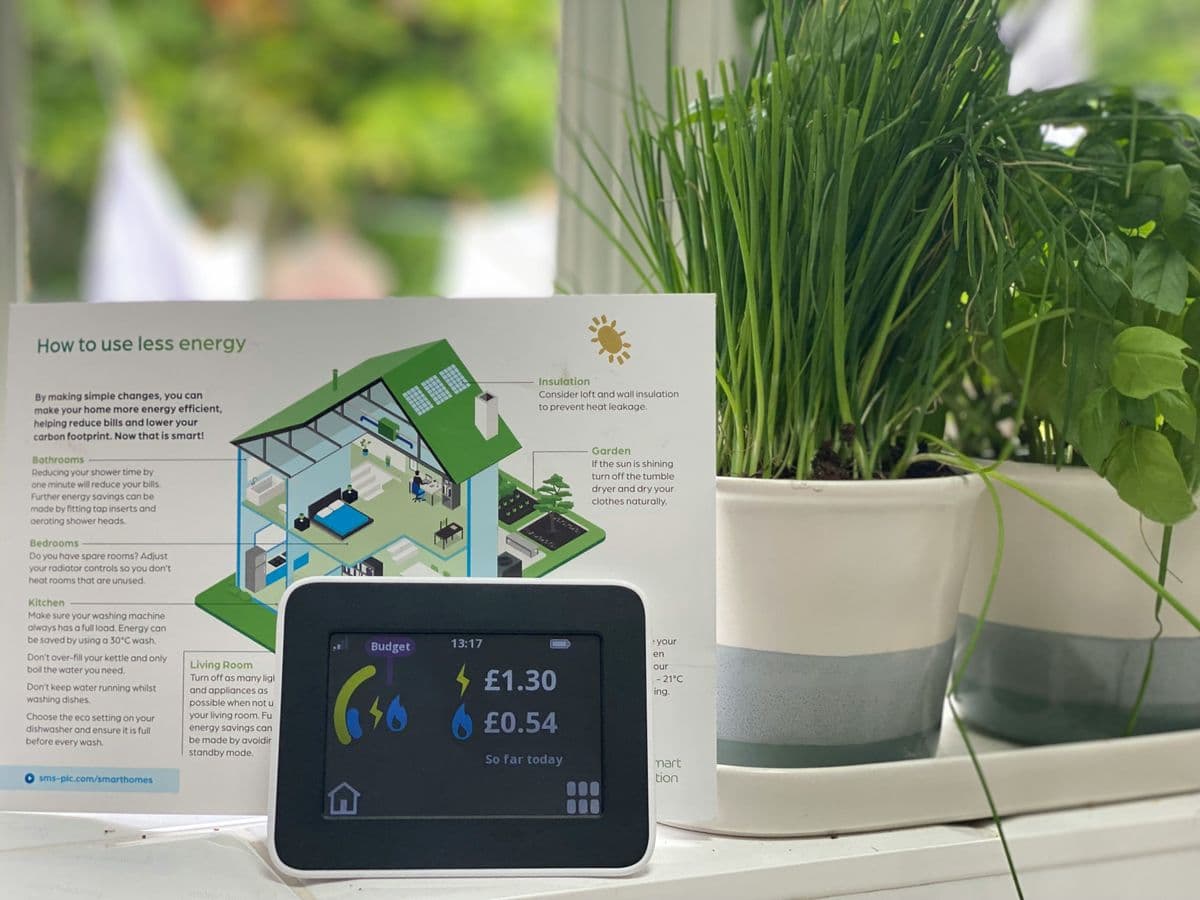
If you don't have a smart meter, request one from your supplier (free). The in-home display shows your real-time energy usage in pounds and pence.
Why it works: When you can see money ticking away, you naturally use less. Studies show smart meters reduce energy use by 3-5% just through awareness.
Check the display when you turn things on and off. You'll quickly learn which appliances cost the most. The oven, the shower, and the tumble dryer are usually the biggest surprises.
The Free Wins (Save £50-100/Year)
These cost nothing and take no effort once you've set them up.
- Close doors. Keep doors closed between heated and unheated rooms. A closed door is a free insulation barrier
- Use sunlight. Open curtains on south-facing windows during the day to let in free heat. Close them at dusk to trap it
- Cook efficiently. Use lids on pans (boils faster, uses less energy). Batch cook rather than cooking individual meals — check our batch cooking guide and slow cooker meals
- Layer up before turning the heating up. A jumper adds about 2°C of perceived warmth. That's a jumper vs. £80-100 per year. The jumper wins
Financial Support If You're Struggling
If you're genuinely struggling to afford energy bills, there's help available:
Warm Home Discount: £150 off your electricity bill if you're on a low income or receive certain benefits. Applied automatically for some groups; others need to apply through their supplier.
Winter Fuel Payment: £100-300 for households with someone born before a qualifying date. Check gov.uk for current eligibility.
Cold Weather Payment: £25 for each 7-day period of very cold weather if you're on certain benefits.
Energy company hardship funds: Most big suppliers have funds for customers in genuine financial difficulty. Call them and ask — they'd rather help than have you fall into debt.
Local council support: Many councils offer emergency grants or energy vouchers. Contact your local council's welfare assistance team.
Citizens Advice: Free, confidential advice on energy debt and bills. citizensadvice.org.uk or call 0800 144 8848.
Never sit in a cold home because you're worried about the bill. There is always support available. Reach out before the debt becomes unmanageable.
The Annual Energy Audit
Once a year (October is ideal, before winter), spend 30 minutes on this:
- Check your tariff — are you still on the best deal?
- Check your thermostat — is it set sensibly?
- Check your TRVs — are unused rooms turned down?
- Check your draught-proofing — any new gaps?
- Check your timer — does it match your current routine?
- Check your boiler — when was it last serviced? An inefficient boiler wastes money and can be dangerous
These small checks prevent the gradual creep of wasted energy that happens when settings drift or circumstances change.
The Maths
Saving £300-500 per year on energy isn't dramatic, but it compounds:
- That's £25-40 per month back in your pocket
- Over 5 years: £1,500-2,500 saved
- Over 10 years: £3,000-5,000 saved
And unlike cutting things out of your life, most of these savings involve zero sacrifice. You're just being smarter with the same energy you're already using.
Start with the big three: switch tariff, optimise your heating controls, draught-proof your home. That's probably £200-400 per year saved for an afternoon's effort. Everything else is a bonus.
Sources & Further Reading
- Ofgem — Check if your energy bill is right
- Energy Saving Trust — Quick tips to save energy
- GOV.UK — Warm Home Discount Scheme
Related Articles
- How to Build an Emergency Fund on a Low Income
- The £20 Weekly Meal Plan
- Freezer Meals on a Budget
- You're Wasting Money on Subscriptions You Forgot About
Frequently Asked Questions
What's the quickest way to reduce my energy bill?
Switch tariffs. It takes 15 minutes on a comparison site like Uswitch or MoneySupermarket, and it can save £100-300 per year. If you haven't switched in the last 12 months, you're almost certainly overpaying. The new supplier handles the entire transfer process.
Does turning the thermostat down actually make a difference?
Yes, and it's significant. Each degree you reduce saves roughly £80-100 per year. Dropping from 22°C to 20°C saves £160-200 annually. Most people adapt within 3-4 days. Pair this with a decent jumper and you won't notice the difference in comfort.
Should I leave the heating on low all day or use the timer?
Use the timer. The idea that leaving heating on low all day is cheaper is a myth. Set your heating to come on 30 minutes before you need it and turn off 30 minutes before you leave or go to bed. Radiators retain warmth after the boiler switches off, so you get the benefit without paying for empty-house heating.
What help is available if I can't afford my energy bills?
Several schemes exist: the Warm Home Discount (£150 off electricity), Winter Fuel Payment (£100-300 for qualifying households), Cold Weather Payments, and energy company hardship funds. Your local council may also offer emergency grants or energy vouchers. Contact Citizens Advice (0800 144 8848) for free, confidential support before debt becomes unmanageable.
This article is for informational purposes only and is not a substitute for professional medical advice. Always consult your GP before making changes to your diet, exercise routine, or health management.
Gary is a UK night shift worker and the founder of OffShift. Content on this site is for informational purposes only and is not a substitute for advice from your GP or a qualified health professional. About the author →
The Shift Worker's Health Reset
Practical advice on sleep, meals, and energy — built around your rota. Free, every week.
No spam, unsubscribe anytime.